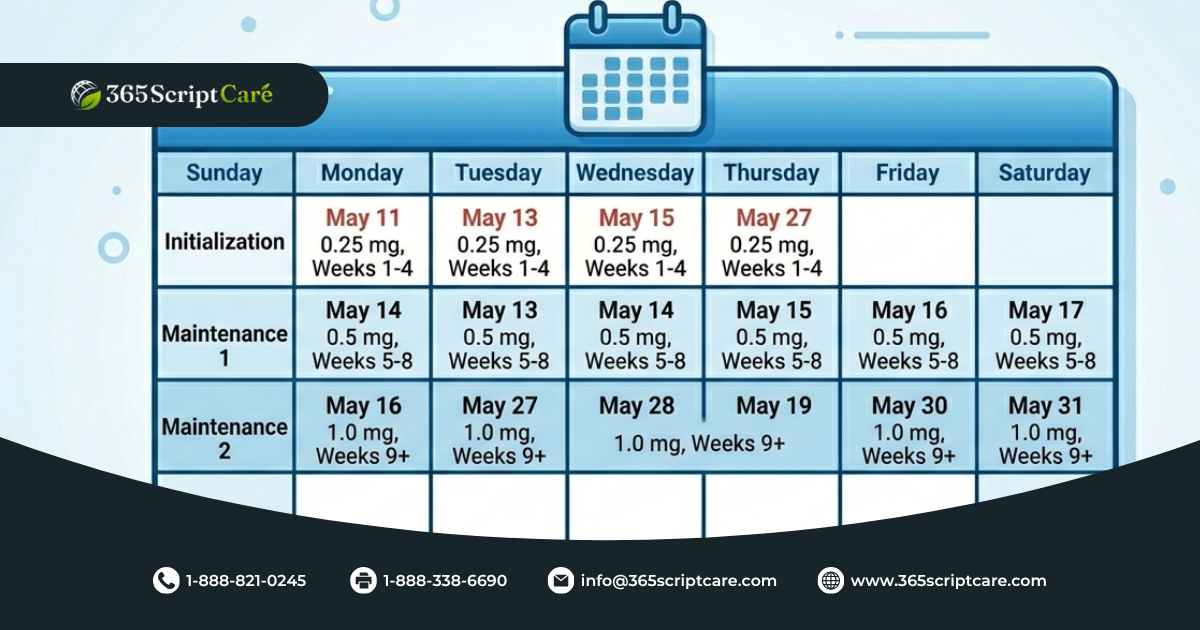
The Ozempic dosage chart shows a gradual four-step schedule: starting at 0.25 mg weekly for four weeks, stepping up to 0.5 mg, then 1 mg, and reaching a maximum of 2 mg for those who need tighter blood sugar control.
Ozempic (Semaglutide) is a once-weekly injectable medication prescribed to adults with type 2 diabetes, and following the Ozempic dosage chart correctly is what makes the treatment both safe and effective.
Many patients are unsure when to move from one dose to the next, what side effects come with each step, and whether higher doses are always better. The short answer is: your doctor decides the right dose based on your blood sugar response, weight, and tolerance. What the Ozempic dosage chart gives you is a structured starting point so your body adjusts without unnecessary discomfort.
Keep reading to learn how each dose level works, how long to stay at each stage, what to watch for as you increase, and practical tips to stay consistent with your injections.
What Is the Ozempic Dosage Chart?
The Ozempic dosage chart is a step-by-step schedule that walks patients through increasing doses of Semaglutide over time. It is designed to reduce side effects while giving the medication time to work properly in your body. The chart applies to all adults using Ozempic for type 2 diabetes management.
At its core, the Ozempic dosage chart has four dose levels. Each level corresponds to a specific weekly injection amount. Patients typically stay at each dose for at least four weeks before increasing, though some may need more time depending on how they feel.
Here is a full breakdown of the ozempic dosage chart:
| Dose Stage | Weekly Dose | Duration | Purpose |
| Stage 1 | 0.25 mg | 4 weeks (starter) | Allow body to adjust, not a treatment dose |
| Stage 2 | 0.5 mg | 4+ weeks | First treatment dose for blood sugar control |
| Stage 3 | 1 mg | 4+ weeks | Increased control if 0.5 mg is not enough |
| Stage 4 | 2 mg | Ongoing (if needed) | Maximum dose for additional A1C reduction |
The 0.25 mg dose is a starter dose only. It is not meant to control blood sugar. Its job is to ease your system into the medication and reduce the chance of nausea or stomach upset. Most people move to 0.5 mg after the first month.
How the Ozempic Dosage Chart Works Week by Week
Following the Ozempic dosage chart week by week gives your body time to adapt. Here is what typically happens at each level:
Weeks 1 to 4: The 0.25 mg Starter Dose
Your first four weeks on Ozempic are about getting comfortable with the injection routine. At 0.25 mg, Semaglutide begins interacting with GLP-1 receptors, but the dose is too low for significant blood sugar impact. Some patients feel mild nausea during this phase. That is normal and usually fades by the end of the first month.
Tip: Inject Ozempic on the same day each week. Whether it is Monday morning or Friday evening, consistency helps maintain steady levels in your system.
Weeks 5 to 8: Moving to 0.5 mg
After four weeks, the Ozempic dosage chart calls for an increase to 0.5 mg. This is the first true therapeutic dose. Most patients start noticing real changes in blood sugar levels and possibly appetite. If 0.5 mg is working well and side effects are manageable, your doctor may keep you here long-term.
You can also look at Ozempic through our prescription referral service if your licensed medical doctor has issued a valid prescription written in English.
Weeks 9 and Beyond: 1 mg and 2 mg
If blood sugar targets are not being met after at least four weeks at 0.5 mg, the Ozempic dosage chart moves to 1 mg. This dose provides stronger A1C reduction. For patients who still need more control, 2 mg is the highest approved level. Your doctor evaluates your labs before recommending this step.
Not every patient reaches 2 mg. Many people find 0.5 mg or 1 mg is enough. The goal of the Ozempic dosage chart is to use the lowest effective dose, not the highest possible one.
Ozempic Dosage Chart for Weight Loss vs. Blood Sugar Control
A common question is whether the Ozempic dosage chart differs between using the medication for type 2 diabetes versus weight loss. Technically, Ozempic is approved for type 2 diabetes only. For weight management, a similar medication called Wegovy (also Semaglutide, but at higher doses) is prescribed separately.
That said, many patients on the Ozempic dosage chart also notice weight reduction, especially as doses increase. This is a recognized secondary effect of Semaglutide, not a primary goal when using Ozempic specifically.
If your doctor determines you need weight loss support alongside blood sugar management, they may consider options like Wegovy or Saxenda, which follow different dosing schedules than the Ozempic dosage chart.
For a closer look at how Semaglutide is dosed for weight loss, read our post on Wegovy reviews to compare approaches.
Side Effects at Each Stage of the Ozempic Dosage Chart
Side effects often track with dose increases on the ozempic dosage chart. Knowing what to expect at each level helps you prepare and stay on track.
| Dose Level | Common Side Effects | When They Usually Ease |
| 0.25 mg | Mild nausea, reduced appetite | Within 1 to 2 weeks |
| 0.5 mg | Nausea, occasional vomiting, bloating | Within 2 to 4 weeks |
| 1 mg | Nausea, diarrhea, heartburn, fatigue | Varies; often 3 to 4 weeks |
| 2 mg | Stronger GI symptoms possible | May take longer to settle |
GI side effects are the most common reason patients slow down their dose increases. If you are struggling with nausea at 0.5 mg, your doctor might recommend staying at that level longer before moving up. Never increase your dose on your own without medical guidance.
Want to know more about a specific symptom? Our post on does Ozempic cause constipation breaks down GI effects in detail.
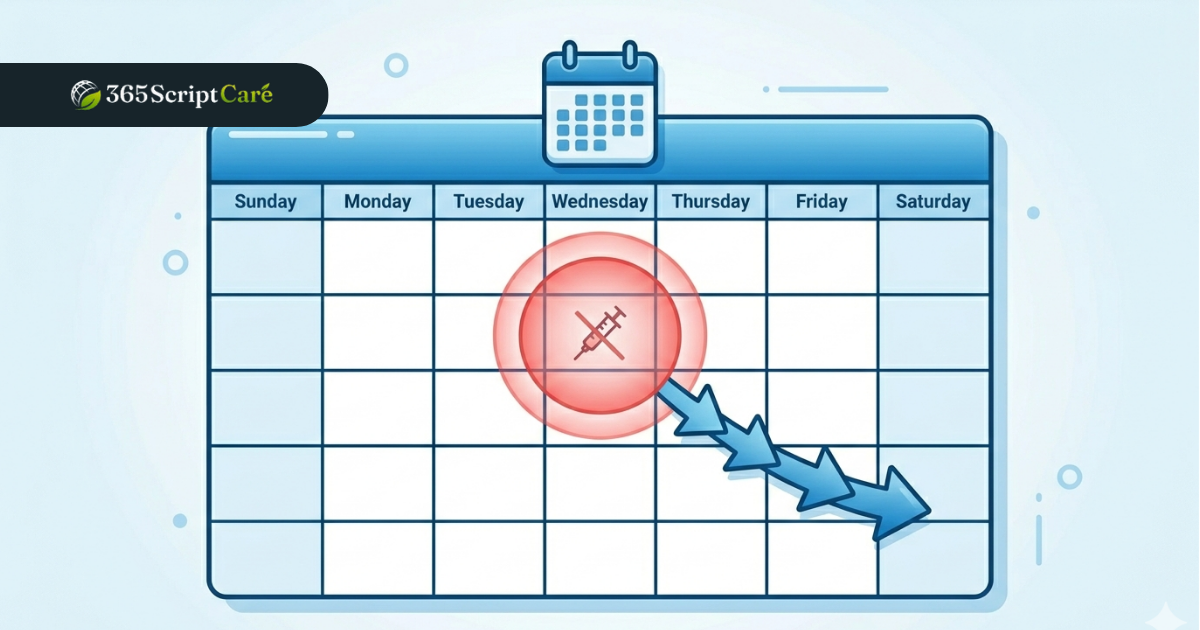
What Happens If You Miss a Dose on the Ozempic Dosage Chart
Missing a dose happens. The Ozempic dosage chart schedule accounts for this with some flexibility. Here is what you need to know:
- If you miss a dose and it has been 5 days or fewer, inject it as soon as you remember.
- If more than 5 days have passed, skip the missed dose and resume on your regular day.
- Never inject two doses of Ozempic within the same week.
- If you frequently miss doses, talk to your doctor about ways to build a better routine.
Consistency matters with the Ozempic dosage chart. Irregular dosing can reduce how well the medication controls blood sugar and may increase side effects when you return to your regular schedule.
How to Get the Most From the Ozempic Dosage Chart
Getting results from the Ozempic dosage chart goes beyond just injecting on schedule. Here are practical habits that support the medication:
- Inject on the same day each week: This keeps Semaglutide levels stable in your bloodstream.
- Rotate injection sites: Use the abdomen, thigh, or upper arm. Rotating reduces skin reactions.
- Eat smaller portions: Ozempic slows digestion, so large meals can worsen nausea, especially at higher doses.
- Stay hydrated: Drinking water helps manage GI discomfort during dose increases.
- Track your blood sugar: Regular monitoring tells you whether your current dose on the ozempic dosage chart is working.
- Store properly: Unopened pens go in the refrigerator. In-use pens can be kept at room temperature for up to 56 days.
Also consider pairing Ozempic with other prescribed medications your doctor may recommend. For example, Rybelsus is an oral form of Semaglutide that some doctors prescribe when injections are not preferred.
Things To Know About the Ozempic Dosage Chart
Prescriptions must come from a licensed medical doctor practicing in the USA: 365 Script Care is a prescription referral service with a licensed contracted pharmacy department. We do not accept prescriptions issued outside the USA or written in languages other than English.
We ship directly to your home: Medication is mailed to your residential address. We do not ship to doctor’s offices, clinics, or hospitals. Delivery typically takes 7 to 10 business days from the date your order is shipped.
Maximum 90-day supply: We ship up to a 90-day supply of Ozempic, depending on what your prescription allows.
We are not a US-based pharmacy: Because we are located outside of the USA, we do not accept US insurance plans. All orders are for personal use only.
Telehealth is separate: If you need to consult a doctor before starting Ozempic, that is a separate process. We do not offer telehealth services. How you connect with a physician is up to you.
Follow the Ozempic dosage chart as prescribed: Never adjust your dose without speaking to your doctor. The chart is a guide, but your individual response determines your actual schedule.
Final Thoughts on Reading and Following the Ozempic Dosage Chart
The Ozempic dosage chart is a simple but important roadmap. It walks you from a starter dose of 0.25 mg through to a maximum of 2 mg, giving your body time to adjust at every stage. The structure exists for a reason: moving too fast increases side effects, and staying too low may not give you the blood sugar control you need.
Whether you are newly starting Ozempic or curious about your next dose increase, the most important thing is to work with your doctor. The Ozempic dosage chart gives you the framework, but your physician gives you the personalized path within it.
If you have a valid prescription from a licensed US physician and need help accessing your medication, 365 Script Care is a prescription referral service with a licensed contracted pharmacy department ready to assist. We ship directly to your home within 7 to 10 business days. For questions, contact us directly.
Frequently Asked Questions About the Ozempic Dosage Chart
What is the starting dose on the Ozempic dosage chart?
The starting dose on the Ozempic dosage chart is 0.25 mg once weekly for the first four weeks. This is a starter dose only and is not intended to lower blood sugar. It helps your body adjust to Semaglutide before stepping up to the therapeutic 0.5 mg dose. Always follow your doctor’s instructions for when to increase.
How long do you stay at each dose level on the Ozempic dosage chart?
You stay at each dose level for at least four weeks before increasing. Your doctor may recommend staying longer at a particular dose if your blood sugar is well controlled or if you are experiencing side effects. The pace of the Ozempic dosage chart is personalized, not one-size-fits-all.
Can you skip dose stages on the Ozempic dosage chart?
No. Skipping stages on the Ozempic dosage chart is not recommended. Each step exists to reduce the risk of side effects and allow your body to adapt. Jumping from 0.25 mg directly to 1 mg, for instance, increases the likelihood of severe nausea or stomach problems. Always progress as instructed by your licensed physician.
Does the Ozempic dosage chart change if you are using it for weight loss?
Ozempic is approved for type 2 diabetes, not directly for weight loss. The Ozempic dosage chart remains the same regardless of whether your doctor is targeting blood sugar or secondary weight changes. If weight management is the primary goal, your doctor may recommend a different medication like Wegovy, which has its own dosing schedule. For more detail, read our Mounjaro prescription weight loss post to compare options.
What should I do if side effects make it hard to follow the Ozempic dosage chart?
If side effects are disruptive, contact your doctor before making any changes. Your doctor may advise staying at your current dose longer before moving up, adjusting meal timing, or modifying other parts of your routine. Do not stop Ozempic or reduce your dose on your own. Following the Ozempic dosage chart safely always involves working closely with your prescribing physician.