Zepbound and Mounjaro are medications that contain the same active ingredient, Tirzepatide, but serve distinct medical purposes. Mounjaro received approval for helping adults with type 2 diabetes control their blood sugar levels, while Zepbound was approved specifically for weight management in adults dealing with obesity or weight-related health issues. The key difference between Zepbound and Mounjaro lies in their approved medical uses, although both work through the same mechanism in the body. Mounjaro targets blood sugar regulation as its primary goal, with weight reduction often occurring as a beneficial side effect. Zepbound focuses directly on weight reduction, which can also lead to improved metabolic markers. Both medications come as weekly injections and require lifestyle changes for best results. Side effects are similar between the two since they share the same active ingredient. Healthcare providers choose which medication to prescribe based on whether someone primarily needs diabetes management or weight loss support, along with other individual health factors.
The Key Differences Between Zepbound and Mounjaro
The fundamental distinction between Zepbound and Mounjaro centers on their approved medical purposes, even though both medications contain Tirzepatide. Mounjaro serves as a treatment for type 2 diabetes, helping adults achieve better blood sugar control when combined with diet and exercise. Healthcare providers prescribe Mounjaro to lower A1C levels, which measure average blood sugar over three months. This medication helps the body respond better to insulin and reduces the amount of sugar the liver produces.
Zepbound, in contrast, received approval as a weight management treatment for adults with a body mass index (BMI) of 30 or higher, or those with a BMI of 27 or higher who also face weight-related health conditions like high blood pressure or high cholesterol. The focus of Zepbound centers entirely on helping people reduce body weight when used alongside reduced-calorie eating and increased physical activity.
Key distinctions include:
- Mounjaro addresses blood sugar problems as its main target
- Zepbound tackles weight issues as its primary focus
- Healthcare providers prescribe each medication based on different health needs
- Both require ongoing lifestyle modifications to work effectively
Another difference appears in how these medications are positioned in treatment plans. Mounjaro often gets prescribed when other diabetes medications haven’t provided adequate blood sugar control. Zepbound becomes an option when lifestyle changes alone haven’t produced sufficient weight reduction for someone dealing with obesity or related health concerns.
The choice between Zepbound and Mounjaro depends on what health challenge a person faces most urgently. Someone with type 2 diabetes would typically receive Mounjaro, while someone primarily concerned with weight management would more likely get Zepbound prescribed. However, since both medications contain the same active ingredient, they can produce overlapping benefits.
Ready to explore your treatment options? Visit 365 Script Care to learn more about accessing these medications through their prescription referral service.
How Zepbound and Mounjaro Work in the Body

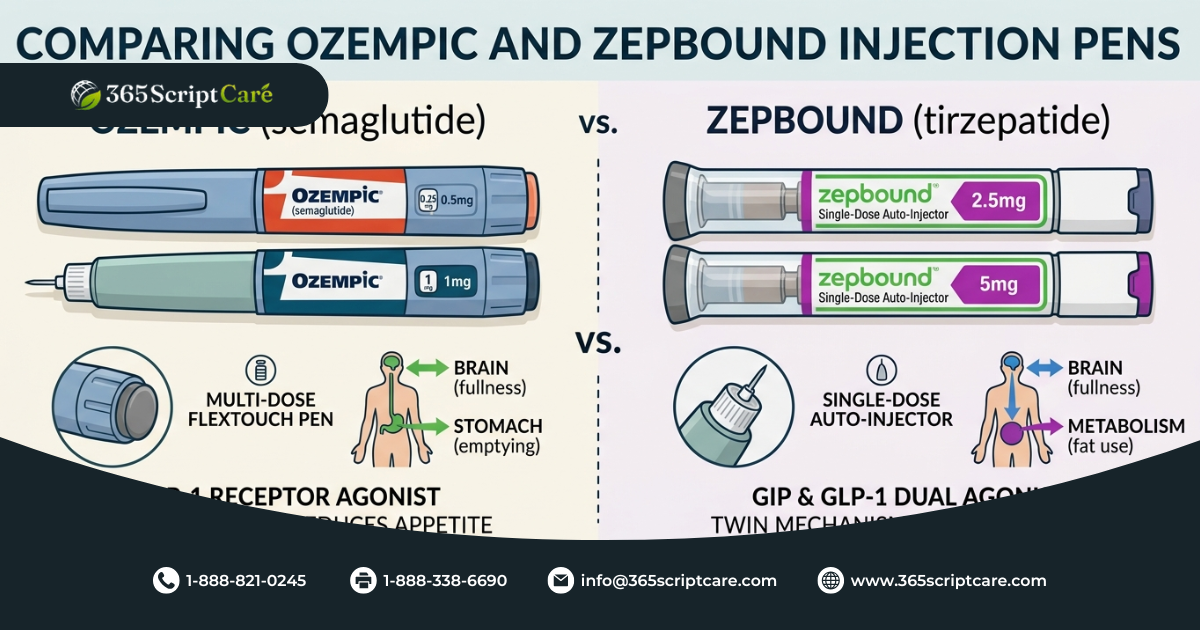
Both Zepbound and Mounjaro contain Tirzepatide, which works as a dual glucose-dependent insulinotropic polypeptide (GIP) and glucagon-like peptide-1 (GLP-1) receptor agonist. This means the medication activates two different receptor systems in the body simultaneously, creating a powerful effect on metabolism, appetite, and blood sugar regulation.
The GIP receptor influences how the body handles sugar and fat storage, while the GLP-1 receptor affects appetite, digestion speed, and insulin release. By activating both receptors, Tirzepatide creates multiple beneficial effects throughout the body.
When someone uses either medication, several processes occur:
- The stomach empties more slowly after meals, which creates longer-lasting feelings of fullness
- Hunger signals to the brain decrease, reducing cravings and the desire to eat
- The pancreas releases more insulin when blood sugar rises after eating
- The liver produces and releases less sugar into the bloodstream
- Body cells become more responsive to insulin, allowing sugar to enter cells more easily
- Fat storage patterns may shift in favorable ways
This dual-action approach makes Tirzepatide particularly effective because it targets multiple systems involved in both weight regulation and blood sugar control. The medication essentially helps the body work more efficiently in processing food and managing energy.
People typically notice reduced appetite within the first few weeks of starting treatment with either Zepbound or Mounjaro. This appetite reduction contributes significantly to weight loss outcomes. The effects on blood sugar control also begin relatively quickly, with many people seeing improvements in their glucose readings within the first month.
The weekly injection delivers a steady amount of medication that works throughout the entire week, which means people don’t need to remember daily doses. This convenience factor helps with treatment adherence, which is crucial for achieving good results with either medication.
Dosing, Administration, and Treatment Progression

Both Zepbound and Mounjaro require once-weekly injections under the skin, typically in the stomach area, thigh, or upper arm. The medications come in pre-filled injection pens that contain a single dose. People rotate injection sites each week to prevent skin irritation or changes at any one location.
Mounjaro offers six dose strengths: 2.5 mg, 5 mg, 7.5 mg, 10 mg, 12.5 mg, and 15 mg. Zepbound comes in five strengths: 2.5 mg, 5 mg, 7.5 mg, 10 mg, and 15 mg. Both medications start at the lowest dose of 2.5 mg weekly, which then increases gradually every four weeks.
| Feature | Mounjaro | Zepbound |
|---|---|---|
| Starting Dose | 2.5 mg weekly | 2.5 mg weekly |
| Available Strengths | 2.5, 5, 7.5, 10, 12.5, 15 mg | 2.5, 5, 7.5, 10, 15 mg |
| Maximum Dose | 15 mg weekly | 15 mg weekly |
| Administration | Once weekly injection | Once weekly injection |
The gradual dose increase serves an important purpose. Starting with a low dose and slowly increasing it allows the body to adjust to the medication, which significantly reduces digestive side effects like nausea and diarrhea. Healthcare providers monitor how someone responds at each dose level before deciding whether to increase further.
Storage and handling requirements:
- Keep unused pens refrigerated between 36°F to 46°F (2°C to 8°C)
- Can be kept at room temperature up to 86°F (30°C) for up to 21 days
- Protect from light by keeping in the original carton
- Never freeze the medication
- Check the liquid before each use – it should be clear and colorless
- Dispose of used pens in a sharps container
Most people reach their maintenance dose within 16 to 20 weeks of starting treatment. Some individuals achieve their goals at lower doses, while others need the maximum dose for optimal results. Healthcare providers make these decisions based on how well someone responds to treatment and whether they experience side effects.
Missing a dose occasionally happens. If someone misses their weekly injection and it’s been less than four days, they should take it as soon as they remember. If more than four days have passed, they should skip that dose and resume with the next scheduled injection. Never take two doses at once to make up for a missed dose.
Side Effects and Managing Them Effectively

Since Zepbound and Mounjaro share the same active ingredient, they produce similar side effects. Most people experience digestive-related effects, particularly when starting treatment or increasing doses. These effects typically improve over time as the body adjusts.
Common side effects include:
- Nausea, especially during the first few weeks after starting or increasing doses
- Diarrhea or looser bowel movements than usual
- Decreased appetite, which contributes to weight reduction
- Vomiting in some people, particularly after eating large meals
- Constipation, which may alternate with diarrhea
- Stomach discomfort, bloating, or indigestion
- Fatigue or tiredness, especially during the adjustment period
- Headaches in some individuals
Less common but serious side effects requiring immediate medical attention:
- Severe stomach pain that doesn’t go away and may radiate to the back
- Vision changes or difficulty seeing clearly
- Rapid heartbeat or unusual heart rhythms
- Severe allergic reactions with swelling of face, lips, tongue, or throat
- Signs of thyroid problems like a lump in the neck or persistent hoarseness
- Kidney problems indicated by decreased urination or swelling in legs
- Symptoms of low blood sugar when combined with certain diabetes medications
Practical strategies for managing side effects:
- Eat smaller, more frequent meals instead of three large meals
- Avoid high-fat, greasy, or fried foods that can worsen nausea
- Stay well-hydrated by sipping water throughout the day
- Choose bland, easily digestible foods when experiencing nausea
- Wait until nausea passes before eating rather than forcing meals
- Take your time eating and chew food thoroughly
- Avoid lying down immediately after eating
- Incorporate ginger tea or peppermint to help settle the stomach
People with certain medical histories need special consideration before starting either Zepbound or Mounjaro. Those with a personal or family history of medullary thyroid carcinoma or Multiple Endocrine Neoplasia syndrome type 2 should not use these medications. Anyone with a history of pancreatitis, severe digestive problems, or kidney disease requires careful evaluation.
Most individuals find that side effects become much less bothersome after the first four to eight weeks of treatment. However, some people experience persistent digestive issues that may require dose adjustments or additional supportive treatments. Open communication with healthcare providers helps ensure side effects remain manageable while still achieving treatment goals.
Looking for professional guidance on your treatment journey? Connect with 365 Script Care to access support and medication options through their prescription referral service.
Expected Weight Loss and Timeline with Both Medications
Both Zepbound and Mounjaro can produce significant weight reduction, though they received approval for different primary purposes. People using Mounjaro for diabetes management frequently experience substantial weight loss as an additional benefit. Those using Zepbound for weight management can expect similar results since the medications contain identical active ingredients at comparable doses.
Research shows that people using Tirzepatide at higher doses can achieve average weight reductions ranging from 15% to 22% of their starting body weight over approximately 72 weeks. A person weighing 250 pounds might lose 37 to 55 pounds during this timeframe. Individual results vary significantly based on multiple factors.
Typical weight loss progression:
Weeks 1-4: Early adaptation period
- Most people notice reduced appetite and early weight changes
- Average weight reduction of 2-5% from starting weight
- Side effects may be most noticeable during this phase
- Lifestyle changes feel challenging but important to establish
Weeks 5-16: Active dose escalation
- Weight reduction continues as doses increase every four weeks
- Many people see 5-10% reduction from their starting weight
- Appetite suppression becomes more consistent
- Energy levels often improve as the body adapts
Weeks 17-40: Maintenance dose achievement
- Additional weight reduction occurs as maximum doses are reached
- Total weight reduction often reaches 10-15% for many people
- Eating habits become more established and sustainable
- Physical activity feels easier due to weight reduction
Weeks 41-72: Long-term maintenance
- Weight typically stabilizes with continued treatment
- Total reductions range from 15-22% for those on maximum doses
- Focus shifts to maintaining losses and building healthy habits
- Some people continue to see gradual improvements
Factors influencing individual results:
- Adherence to a balanced, reduced-calorie eating plan
- Consistency with physical activity, even moderate exercise
- Taking medication as prescribed without missing doses
- Starting weight and metabolic factors
- Sleep quality and stress management
- Age and hormonal factors
- Previous weight loss attempts and history
- Genetic factors affecting metabolism
People who view treatment with Zepbound and Mounjaro as part of a comprehensive lifestyle change rather than a quick fix typically achieve better long-term outcomes. The medication provides powerful support for appetite control and metabolic improvements, but lasting success requires building sustainable habits around food and activity.
Some people reach their weight goals before completing 72 weeks of treatment, while others may need to continue medication longer to achieve and maintain their desired outcomes. Healthcare providers help individuals set realistic goals and determine appropriate treatment duration based on progress and overall health improvements.
Who Should Choose Each Medication
Healthcare providers make prescribing decisions based on individual health needs, medical history, and primary treatment goals. The difference between Zepbound and Mounjaro guides these decisions, with each medication serving specific purposes despite containing the same active ingredient.
Situations where Mounjaro makes the most sense:
- Diagnosed with type 2 diabetes and needing better blood sugar control
- A1C levels above target range despite trying other diabetes medications
- Seeking a treatment that addresses both diabetes and weight simultaneously
- Blood sugar readings that remain too high throughout the day
- Risk factors for diabetes complications that need addressing
Situations where Zepbound is the better choice:
- Primary concern focuses on weight management rather than diabetes
- BMI of 30 or higher, or BMI of 27 or higher with weight-related health issues
- Struggling with obesity despite trying diet and exercise alone
- Facing health problems related to excess weight like high blood pressure or sleep apnea
- Not diagnosed with diabetes but needing support for weight reduction
Some people could potentially benefit from either medication. For example, someone with both type 2 diabetes and obesity might qualify for Mounjaro based on their diabetes or Zepbound based on their weight. In these cases, healthcare providers consider several factors:
- Which health concern poses the most immediate risk
- Previous treatments tried and their effectiveness
- Individual preferences and treatment priorities
- Specific health goals and timeline
- Other medications currently being taken
- Overall health status and medical history
Important questions to discuss with healthcare providers:
- What is the primary health goal – blood sugar control or weight reduction?
- How will progress be measured throughout treatment?
- What lifestyle changes should accompany medication use?
- How long might treatment continue?
- What happens if the chosen medication doesn’t produce desired results?
- Are there any reasons one medication might be better than the other?
- What monitoring will be needed during treatment?
Neither Zepbound nor Mounjaro should be used during pregnancy. Women who might become pregnant should discuss contraception with their healthcare provider, as it’s recommended to stop these medications at least two months before trying to conceive.
People with certain medical conditions may not be candidates for either medication. Those with a personal or family history of medullary thyroid carcinoma or Multiple Endocrine Neoplasia syndrome type 2 should not use Tirzepatide. Anyone with a history of severe pancreatitis needs thorough evaluation before starting treatment.
Lifestyle Strategies to Maximize Results
Success with either Zepbound or Mounjaro depends significantly on lifestyle modifications that accompany medication use. These treatments work most effectively when combined with sustainable changes to eating patterns and physical activity levels.
Nutrition approaches that support treatment:
- Build meals around vegetables, lean proteins, and whole grains
- Practice portion control using smaller plates and measuring servings initially
- Eat protein at every meal to promote fullness and preserve muscle mass
- Limit foods high in added sugars and refined carbohydrates
- Choose whole fruits over fruit juices to get fiber benefits
- Include healthy fats in moderate amounts like avocados, nuts, and olive oil
- Plan meals and snacks ahead to avoid impulsive food choices
- Eat slowly and put utensils down between bites
- Stop eating when comfortably satisfied rather than completely full
Physical activity recommendations:
- Start with 10-15 minutes of walking daily if currently inactive
- Gradually increase to 150 minutes of moderate activity weekly
- Include strength training twice weekly to maintain muscle mass during weight loss
- Find activities you genuinely enjoy to make movement sustainable
- Break activity into shorter sessions if needed throughout the day
- Take stairs instead of elevators when possible
- Park farther away to add extra walking steps
- Stand and move for a few minutes every hour during the day
- Try different activities to prevent boredom and maintain motivation
Additional lifestyle factors that support success:
- Aim for 7-9 hours of quality sleep nightly
- Develop stress management techniques like deep breathing or meditation
- Track progress through measurements, photos, or how clothes fit
- Build a support system of friends, family, or support groups
- Celebrate non-scale victories like improved energy or better-fitting clothes
- Stay hydrated by drinking water throughout the day
- Limit alcohol consumption as it adds calories and may worsen side effects
- Address emotional eating patterns with professional support if needed
Strategies for maintaining long-term success:
- View treatment as a tool to support lifestyle changes rather than a quick fix
- Expect plateaus and setbacks as normal parts of the process
- Focus on building habits that can continue even after stopping medication
- Work with healthcare providers to adjust approaches as needed
- Consider working with a nutritionist or wellness coach for additional support
- Keep perspective that sustainable change happens gradually
- Be patient and kind with yourself throughout the journey
People who approach treatment with Zepbound and Mounjaro as part of a holistic lifestyle transformation rather than relying solely on medication typically achieve better long-term outcomes. The medication provides powerful support for appetite control and metabolic improvements, but lasting health changes come from consistent healthy habits built over time.
Moving Forward with Your Treatment Decision
Understanding the difference between Zepbound and Mounjaro helps in making informed decisions about which treatment might be right for your specific health needs. While both medications contain the same active ingredient and work through similar mechanisms in the body, their approved uses guide how healthcare providers prescribe them. Mounjaro serves primarily as a diabetes medication with weight reduction benefits, while Zepbound focuses specifically on weight management with potential blood sugar improvements.
Both medications require commitment to lifestyle changes for optimal results. The injectable treatments work best when combined with balanced nutrition, regular physical activity, adequate sleep, and effective stress management. Most people experience digestive side effects initially, but these typically improve as the body adjusts to treatment over the first several weeks.
Choosing between these medications involves having detailed conversations with your healthcare provider about your specific health goals and medical history. They can evaluate which option aligns best with your needs and monitor your progress throughout treatment. Regular follow-up appointments allow for dose adjustments and ensure that treatment remains both safe and effective for your particular situation.
Frequently Asked Questions
Are Zepbound and Mounjaro the same thing?
Zepbound and Mounjaro contain the same active ingredient, Tirzepatide, but they are marketed as different medications for different approved purposes. Mounjaro received approval for managing type 2 diabetes, while Zepbound gained approval specifically for chronic weight management. Think of them as the same medicine labeled differently based on what they’re primarily used to treat. The dosing is similar, and they work through the same mechanism in the body.
Which one is cheaper, Mounjaro or Zepbound?
Pricing varies considerably based on many factors, making it impossible to say definitively which medication costs less. The actual amount someone pays depends on their specific situation. Both medications represent significant investments in health. Many people explore different options for accessing these medications through prescription referral services like 365 Script Care to find more affordable solutions.
Can I switch from Mounjaro to Zepbound?
Switching between these medications is possible since they contain the same active ingredient at similar dose levels. However, any transition should only happen under direct guidance from a healthcare provider. They can assess whether switching makes sense for your particular situation and health goals. The provider will help determine the appropriate dose when making the change and monitor how the transition affects your results and wellbeing.
Who should not take Zepbound?
Certain people should avoid Zepbound completely. This includes anyone with a personal or family history of medullary thyroid carcinoma or Multiple Endocrine Neoplasia syndrome type 2. People who have experienced serious allergic reactions to Tirzepatide or any ingredients in Zepbound should not use this medication. Those with a history of severe pancreatitis, certain digestive conditions, or advanced kidney problems may need alternative treatments. Pregnant or breastfeeding individuals should discuss all risks and benefits thoroughly with their healthcare provider before considering treatment.
How much weight can you lose on Zepbound in 3 months?
Weight reduction varies considerably between individuals, but many people lose approximately 5-10% of their starting body weight within the first three months of treatment. Someone starting at 220 pounds might lose 11-22 pounds during this initial period. Results depend on numerous factors including starting weight, adherence to lifestyle changes, the dose level reached during this timeframe, and individual metabolic responses. Some people see faster results while others progress more gradually. Both patterns can lead to successful long-term outcomes.
What is the BMI requirement for Zepbound?
Healthcare providers typically prescribe Zepbound for adults with a body mass index (BMI) of 30 or higher, which falls into the obesity category. The medication may also be appropriate for people with a BMI of 27 or higher who have at least one weight-related health condition such as high blood pressure, type 2 diabetes, or high cholesterol. Healthcare providers evaluate the complete health picture rather than relying solely on BMI numbers when determining whether Zepbound is appropriate for an individual person.
Can you drink alcohol while taking Zepbound?
Moderate alcohol consumption is generally considered acceptable while using Zepbound, though discussing drinking habits with your healthcare provider is wise. Alcohol can affect blood sugar levels and may worsen certain side effects like nausea, vomiting, or digestive discomfort. Additionally, alcoholic beverages contain calories that could slow weight reduction progress. If you choose to drink, limit intake to moderate amounts and pay close attention to how alcohol affects how you feel while taking the medication.